
Uncategorized

Sociological Thinker
Uncategorized

Sociological Thinker: Understanding the Minds That Help Us See Society Clearly

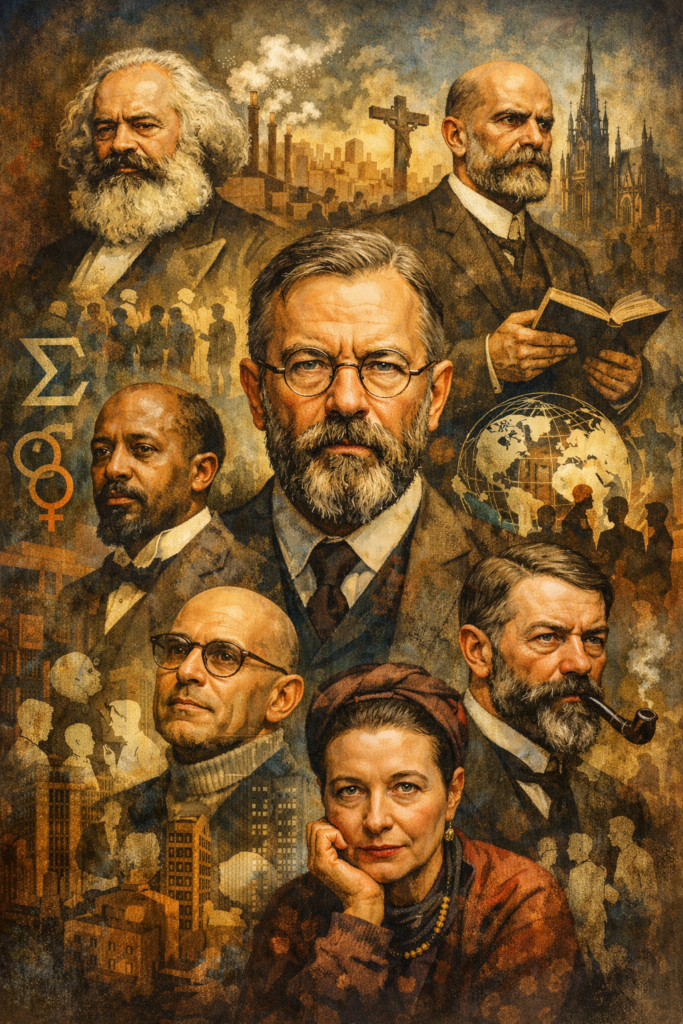
Introduction Have you ever pondered why society functions as it does? Why do individuals adhere to specific traditions, behave differently in groups, or accept inequity in various forms? These are not random questions; these are the types of problems that sociological thinkers attempt to address. A sociological thinker explores beyond ordinary life to discover the underlying patterns that affect human behavior and social connections. Instead than simply accepting society as it is, they examine, analyze, and attempt to explain it in meaningful terms. Understanding sociological philosophers, particularly for those studying sociology, is like uncovering the subject’s basis.   What is a Sociological Thinker? In simple terms, a sociological thinker is a person who studies society in a thoughtful and analytical way. They don’t just observe what is happening around them—they try to understand why it is happening. For example, when most people see poverty, they may feel sympathy. But a sociological thinker asks deeper questions: Why does poverty exist in the first place? Is it caused by individual failure or social systems? How do institutions like government and economy contribute to it? This ability to think critically and connect individual experiences with larger social structures is what makes someone a sociological thinker. Why Are Sociological Thinkers Important? Sociological thinkers are important because they help us make sense of the world we live in. Without them, society would seem confusing and chaotic. They help us: Understand social problems like inequality, discrimination, and unemployment See the hidden structures behind everyday life Develop critical thinking instead of blindly following norms Find solutions to real-world social issues For students, their theories are not just academic—they actually help in writing better answers, understanding concepts clearly, and applying knowledge in real life. Famous Sociological Thinkers and Their Contributions Let’s look at some of the most important sociological thinkers whose ideas still shape sociology today. Karl Marx: Understanding Inequality Karl Marx is one of the most influential sociological thinkers. He focused on how economic systems create inequality in society. According to him, society is divided into two main classes: The rich (bourgeoisie), who own resources The poor (proletariat), who work for them Marx believed that this inequality leads to conflict, and eventually, social change. His ideas help us understand issues like poverty, labor exploitation, and class struggle even today. Max Weber: Understanding Human Behavior Max Weber took a different approach. Instead of focusing only on economics, he emphasized understanding human actions and intentions. He believed that to understand society, we must understand the meanings people attach to their actions. For example, why do people follow religion? Why do they work hard? These are not just economic decisions but also influenced by values and beliefs. Weber also introduced the concept of bureaucracy, explaining how modern organizations function in a structured and efficient way. Emile Durkheim: Understanding Social Order Emile Durkheim is often called the “father of sociology.” He focused on how society maintains order and stability. He introduced the concept of social facts, which are the rules and norms that guide our behavior. For example, laws, traditions, and moral values are all social facts that influence how we act. Durkheim also studied topics like suicide and showed that even personal decisions are influenced by social factors. His work reminds us that we are deeply connected to society, even in our most individual choices. Herbert Spencer: Society as an Organism Herbert Spencer compared society to a living organism. Just like the human body has different parts working together, society also has different institutions like family, education, and economy that function together. He believed in the idea of “survival of the fittest,” suggesting that societies evolve over time. Although some of his ideas are debated today, they played an important role in the development of early sociology. Sociological Thinkers in Today’s World Even though these thinkers lived many years ago, their ideas are still relevant today. In fact, they help us understand modern issues better. For example: Social media can be analyzed using Weber’s ideas about human behavior Economic inequality today can be explained using Marx’s theories Changing family structures can be understood through Durkheim’s concepts This shows that sociology is not just about the past—it is a tool to understand the present and future. How to Think Like a Sociological Thinker The good news is that you don’t have to be a famous scholar to think like a sociological thinker. You can start developing this mindset in your daily life. Here’s how: Question things instead of accepting them blindly Look for patterns in human behavior Connect personal experiences with larger social issues Try to understand different perspectives For example, if you see a trend on social media, don’t just follow it—ask why it became popular and what it says about society. Why Students Should Study Sociological Thinkers For students, sociological thinkers are not just names to memorize—they are tools to understand the subject deeply. Studying them helps you: Build strong concepts Write better and more analytical answers in exams Improve critical thinking skills Relate theory to real-life situations Whether you are preparing for university exams, UGC NET, or UPSC, understanding sociological thinkers can give you a strong advantage. Conclusion A sociological thinker is someone who helps us see beyond the surface of everyday life. They teach us that society is not random—it is shaped by structures, relationships, and ideas that can be studied and understood. From Karl Marx’s focus on inequality to Max Weber’s insights into human behavior and Emile Durkheim’s understanding of social order, these thinkers have given us powerful tools to analyze society. For students, learning about sociological thinkers is not just about passing exams—it is about developing a deeper understanding of the world. And once you start thinking like a sociological thinker, you begin to see society in a completely new way.
Conflict Theory
Uncategorized

Understanding Conflict Theory: A Simple Guide to Power, Inequality, and Society

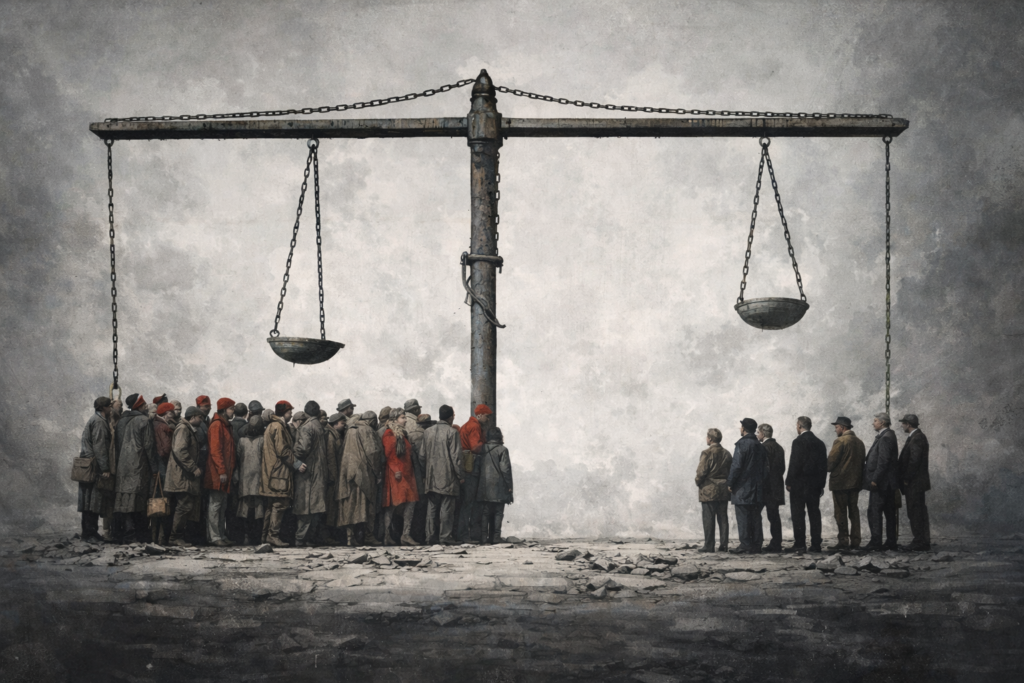
Society often looks organized and stable on the surface. We have institutions like family, education, government, and religion that seem to maintain order. But if we take a closer look, we begin to notice something else—inequality. Some people have more wealth, more opportunities, and more power than others. This imbalance is not accidental, and it plays a major role in shaping social life. This is where conflict theory becomes important. It helps us understand how power and inequality influence relationships within society. What is Conflict Theory? Conflict theory is a sociological perspective that sees society as a system of competition. Instead of harmony and balance, it focuses on struggle and inequality. According to this theory, different groups in society compete for limited resources such as money, power, education, and status. The central idea is simple: those who have power try to keep it, while those who lack power try to gain it. This constant struggle creates tension, conflict, and eventually social change. In other words, society is not always fair—and conflict theory explains why. Origin of Conflict Theory The roots of conflict theory can be traced back to the ideas of Karl Marx, one of the most influential sociologists. Marx believed that society was divided into two main classes: The bourgeoisie (the rich, who own resources) The proletariat (the working class, who sell their labor) According to Marx, the bourgeoisie exploit the proletariat to maintain their wealth and power. This exploitation leads to class conflict, which eventually results in social change. Although modern conflict theory has expanded beyond class to include caste, gender, race, and other inequalities, Marx’s ideas remain its foundation. Key Features of Conflict Theory To understand conflict theory better, let’s look at its main features: 1. Society is Based on Inequality Not everyone has equal access to resources. Some people are born into privilege, while others struggle from the beginning. 2. Power Shapes Society Those who have power control important institutions like education, politics, and media. They often create rules that benefit themselves. 3. Conflict is Natural Because resources are limited, competition is unavoidable. Different groups compete, leading to conflict. 4. Social Change is Driven by Conflict Change doesn’t happen automatically. It often comes from protests, resistance, or revolutions. Conflict Theory in Everyday Life One of the strengths of conflict theory is that it can be applied to everyday situations. It is not just about large revolutions or political struggles—it is present in our daily lives. Education System Not all students receive the same quality of education. Private schools often have better facilities compared to government schools. This creates unequal opportunities and reinforces social inequality. Workplace In workplaces, employers aim to maximize profit, while employees seek fair wages and better working conditions. This difference in interests creates tension and conflict. Gender Inequality In many societies, men have historically held more power than women. This imbalance has led to movements for gender equality, highlighting ongoing conflict. Caste System In the Indian context, caste-based inequality is a strong example. Dominant castes often have more access to resources, while marginalized castes face discrimination and limited opportunities. Digital Divide Even in the modern world, access to technology is unequal. Those with better internet and digital tools have more opportunities than those without. Why Conflict Theory Matters Understanding conflict theory is important because it encourages critical thinking. Instead of accepting society as it is, it pushes us to ask deeper questions: Who is benefiting from this system? Who is being excluded? Are these inequalities justified? It helps us recognize hidden power structures that may not be visible at first glance. For students, conflict theory provides a framework to analyze real-world issues. For society, it creates awareness and encourages efforts toward equality and justice. Criticism of Conflict Theory While conflict theory is powerful, it is not without criticism. Some sociologists argue that: It focuses too much on conflict and ignores cooperation It presents society in a negative way Not all relationships are based on power struggles For example, families often function based on love and cooperation rather than conflict. Similarly, communities can work together for common goals. These criticisms remind us that conflict theory is just one perspective among many. It does not explain everything, but it provides valuable insights. Conflict Theory in Modern Society In today’s rapidly changing world, conflict theory remains highly relevant. We see its influence in many areas: Economic Inequality The gap between the rich and the poor continues to grow. Wealth is concentrated in the hands of a few, leading to social tension. Social Movements Movements related to gender equality, caste justice, and labor rights are examples of conflict leading to change. Political Power Different groups compete for political influence, shaping policies and decisions that affect society. Global Inequality Even at the global level, developed and developing countries compete for resources, creating international conflicts. Conflict Theory and Social Change One of the most important contributions of conflict theory is its explanation of social change. It shows that change is not always peaceful or gradual. Instead, it often comes through struggle. For example: Workers demanding fair wages Women fighting for equal rights Marginalized communities seeking justice These struggles may create tension, but they also lead to progress. Conflict theory reminds us that without questioning and resistance, inequality may continue unchecked. Final Thoughts Conflict theory offers a powerful way to understand society. It reveals that beneath the surface of order and stability, there are ongoing struggles for power and resources. By focusing on inequality and conflict, this theory helps us see the reality of social life more clearly. It encourages us not to accept things blindly but to question and analyze the systems around us. In a world where inequality still exists, conflict theory remains an essential tool for understanding and change. It not only explains how society works but also inspires us to imagine a more just and equal future.

Scroll to Top